Fluoride in New Jersey Public Water: Who Adds It and How to Check
Fluoride questions often start with a simple puzzle: does the water serving your New Jersey home contain fluoride, and did the supplier add it? The answer can vary by service area, and a town name alone may not identify the supplier. Here’s how to trace the water system, check its reports and ask the right follow-up questions.
Who decides whether fluoride is added
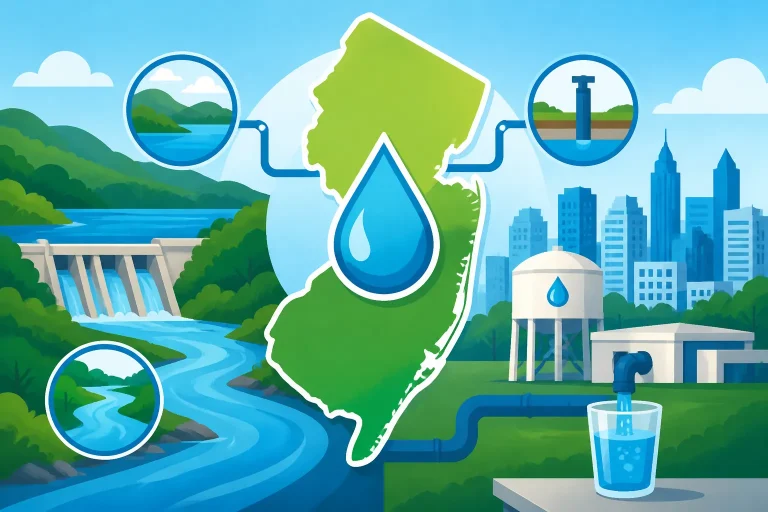
Fluoride in tap water can come from different places. It may occur naturally in the source water, be added by a water supplier, or be present because a supplier receives water from another system. Those possibilities can lead to different results in nearby communities, or even for neighboring addresses.
For a customer, the practical question is not just whether fluoride appears in a report. It is also how it got there. A reported amount by itself may not tell you whether the supplier intentionally adds fluoride, whether the water contains naturally occurring fluoride, or whether the supply is a blend. The supplier that serves your address is usually the best place to clarify those details.
A municipality may have a role in decisions about its water supply, but it may not be the organization that treats or delivers the water. Some communities are served by a regional supplier, and a supplier can serve customers across municipal boundaries. That is why searching only for a town’s general policy can lead to an incomplete answer.
The decision and the delivery arrangements are separate questions:
- Who decides whether fluoride is added? This depends on the organization and arrangements for the system serving the community. Ask the town or supplier which body makes that decision.
- Who treats and delivers the water? This is the supplier identified for your address, which may not be the municipality.
- What is in the water at the treatment plant or system? The supplier’s water-quality information may show reported results, but it may not explain every operational detail.
- What comes out of your faucet? Water can change as it moves through building plumbing, so a system report is not necessarily a measurement from your own tap.
For a starting point on local decision-making, see Who Decides Whether a New Jersey Town Adds Fluoride to Its Water?. To understand why the supplier may not match the town name, see Who Supplies Your Water? New Jersey’s Regional Suppliers, Explained.
The most reliable approach is to confirm the supplier first, then ask that supplier whether fluoride is added, whether any reported fluoride is naturally present, and which result applies to the water delivered to your address. If the supplier buys water from another system, ask whether it can identify the source system or systems as well.
How to identify the supplier for your address
Before looking for fluoride results, establish which water system serves the property. This is easy to overlook when a town has more than one supplier or when a regional system serves several towns. A municipal boundary is not always the same as a water-service boundary.
Start with a recent water bill if one is available. The bill may name the company, authority or other organization responsible for water service. If the account is held by a landlord, ask for the supplier’s name and the water-quality report that applies to the property. A bill can be a useful clue, but it may not explain whether water is purchased from another supplier or whether different parts of town receive water from different systems.
If you do not have a bill, use an official water-system lookup or contact the town and ask which supplier serves the specific address. The address matters: a broad search for a town may return a system that serves only part of it. How to Find a New Jersey Town’s Supplier and Its Fluoride Results explains how to connect a town with its supplier and results. For another way to locate reports, see How to Find Water Reports With the Jersey WaterCheck System Finder.
A practical search sequence looks like this:
- Check a water bill or account notice. Note the name of the water supplier, not just the town or sewer provider.
- Search by the full service address. If a report-finding tool asks for a town or address, use the most precise information it accepts.
- Confirm the result with the supplier. Ask whether the system shown serves your particular address, especially if search results list more than one supplier.
- Ask about purchased or blended water. If the supplier receives water from another system, ask whether the reported fluoride information covers the water delivered to your area.
- Save the report and supplier details. Keeping the report date and system name together makes it easier to compare information later or ask a focused follow-up question.
If you are moving, do not rely on the seller’s general description of the town’s water. Ask for the supplier associated with the property and confirm it directly. The same caution applies to renters: an apartment address can be served by a supplier different from the one serving a nearby building.
For customers whose supplier is not clear, Not Sure Which NJ Water System Serves You? Start With Your Bill offers a useful next step. Once the supplier is confirmed, use its report or customer-service channel to ask about fluoride specifically. A search result can point you in the right direction, but the supplier can clarify whether the result applies to your service area.
How to check fluoride results in a report
A water-quality report is a sensible place to look, but it helps to read it with a specific question in mind. A report may include a fluoride entry, yet the entry might not answer whether fluoride was deliberately added. It may also summarize results for a system rather than measure the water at your faucet.
Begin with the report for the correct supplier and service area. Reports with similar names can cover different systems, source waters or communities. If a supplier publishes more than one report, do not assume that the first result in a search applies to your home. Confirm the system name and the area covered before interpreting a fluoride line.
Then look for a section or entry labeled “fluoride.” The report may give a measured result, describe a range, or present other information about the system. Read the column headings and explanatory notes along with the entry. A number without its units, sampling context or report notes can be easy to misunderstand.
The City of Camden Division of Utilities states that in the 2025 report, the U.S. Department of Health and Human Services’ recommended fluoride concentration was 0.7 milligrams per liter. That reference point does not establish what is present in every New Jersey water system, nor does it show whether your supplier adds fluoride. For your own supply, use the report that applies to your supplier and ask how to interpret its result.
A report may leave some questions unanswered. For example, a result alone may not distinguish naturally occurring fluoride from fluoride added during treatment. It may not say whether the supplier changes its operating approach from time to time, or whether an area receives water from another system. If you cannot find a fluoride entry, that does not by itself establish that fluoride is absent. Ask the supplier whether the report includes fluoride information and where it appears.
When reading the report, note:
- The supplier and system name printed on the report.
- The service area the report covers.
- The fluoride entry, if there is one.
- The units and notes that explain the result.
- Any statement about source water, purchased water or treatment.
- The report period, so you know which results you are reviewing.
For help with the report’s layout, see Reading a New Jersey Consumer Confidence Report, Section by Section. If you are unsure which report is the right one for your address, Finding the Water Quality Report for Your New Jersey Address can help you narrow the search.
It is also worth separating a system-wide report from a faucet test. A report usually describes information for a water system, while a sample collected at home reflects the water at the sampled tap and the conditions when it was collected. If you need a result for your own faucet, ask the supplier whether it offers testing or can explain how to obtain an appropriate test. Do not assume that a system report is a substitute for a household sample, or that a household sample explains the supplier’s treatment practices.
What a fluoride result can and cannot tell you
A reported fluoride result is one piece of information about the water, not a complete explanation of how the system operates. It can help show what the report says about fluoride for the system or sampling period covered. By itself, it may not answer where the fluoride came from, whether it was added intentionally, or how water quality varies across a service area.
Added fluoride versus naturally occurring fluoride
The distinction between added and naturally occurring fluoride matters when your question is about a supplier’s policy. If fluoride is detected, that result alone does not prove that the supplier adds it. The water may contain naturally present fluoride, or it may receive water from another system. Conversely, a report that does not make the source clear is not enough to confirm that no addition occurs.
Ask the supplier directly: “Does this system add fluoride, or is the reported fluoride naturally occurring or associated with water purchased from another system?” If the answer involves a contributing supplier, ask which report or contact can explain that source. The goal is to connect the reported result to the actual water supplied to your property.
A system result versus your faucet
A public water report and a household tap sample answer different questions. The report describes the supplier’s system information. A faucet sample describes water at a particular place and time. Building plumbing and the location of a tap can matter to a household sample, while a system report may cover a broader service area.
That difference does not make one source of information useless. It means you should match the evidence to the question. To find out whether the supplier adds fluoride, contact the supplier. To find out what a particular household tap contains, ask how to arrange a suitable sample and how to interpret the result. If a result is unexpected or difficult to understand, request the laboratory’s reporting notes or ask a qualified water-testing professional for help.
A missing entry is not a complete answer
Reports vary in how they present information. If fluoride is not easy to find, check the report’s contents and explanatory notes, then ask the supplier whether fluoride is tested or reported for that system. Do not infer a treatment decision from an empty search result or a line that you cannot interpret.
You can also check whether you are looking at the correct supplier’s report. A neighboring town’s report may not apply to your address, even if the water tastes similar or the communities share a boundary. If the report names a system that supplies another system, ask which information applies to the water delivered to your home.
For more help with the difference between a reported result and what reaches your faucet, see Annual Reports vs. Your Faucet: Why System Results Aren’t Your Tap. For background on how a fluoride entry may appear in a report, see Added or Natural? Reading the Fluoride Line on a New Jersey Report.
Questions to ask your water supplier
A clear, specific question is more likely to get a useful answer than a general request for “the fluoride level.” The supplier may be able to point you to the relevant report, explain whether it adds fluoride, or clarify where its water comes from. If the first person you reach does not know, ask which department or staff member handles water-quality questions.
Consider asking:
- Does this water system add fluoride?
- If the report shows fluoride, is it naturally present, added by this system, or associated with water purchased from another system?
- Which report applies to my complete service address?
- Does the reported result cover the water delivered to my area, or does the system serve more than one area?
- Where in the report should I look for fluoride information?
- What units and sampling context should I use when interpreting the result?
- If the supplier receives water from another system, where can I find information about that source?
- Can I arrange a test of water from my own tap, and what type of test would answer my question?
- Who should I contact if the report and the supplier’s explanation appear inconsistent?
When you contact the supplier, provide the service address and the system name shown on the bill or report, if you have it. If you are calling about a rental, say whether you are the tenant or property owner and ask what report the supplier recommends for that building. Avoid sending personal account details through a channel that is not intended for them.
Keep a short record of the answer: the report you were referred to, the date you reviewed it and any explanation of whether fluoride is added or naturally present. This is especially useful if you are comparing information from different systems or reviewing a report after moving.
If the supplier says it does not add fluoride, you can still ask whether fluoride is present naturally or comes from a contributing source. If the supplier says it does add fluoride, you can ask where that information appears in its report and what result is reported for the applicable system. Either answer is more useful when tied to the address and report that actually apply.
A supplier’s explanation of its water system is not personal medical advice. If your concern is about a health effect or a household member’s specific needs, ask a local health department or medical professional. For a comparison of fluoride and another water-quality topic, see Fluoride vs. PFAS in New Jersey Tap Water: Two Different Concerns.
What renters, buyers and households should check
The same basic steps apply whether you own or rent, but access to information can differ. A renter may not receive the water bill directly, and a buyer may be relying on a seller’s description rather than the supplier’s records. In either case, confirm the service arrangement instead of assuming that the town name settles the question.
If you rent
Ask the landlord or property manager for the water supplier’s name and the report that applies to the building. If the water bill is included in rent or held in the owner’s name, that does not prevent you from asking which system supplies the property. You can also contact the supplier with the building address and ask how to locate the correct report.
If the property has more than one building or a complex service setup, make sure the report applies to the building where you live. A nearby building’s supplier or report may not be the right one. For broader renter questions about water information and reports, see Renters and Tap Water in New Jersey: Bills, Lead Notices and Reports.
If you are buying or moving
Ask which supplier serves the property and whether the seller’s report applies to that exact address. If the seller says the town adds or does not add fluoride, ask which supplier or official report supports that statement. The answer can change if the home is served by a neighboring system or a regional supplier.
After moving, check the supplier again rather than relying on information from your previous home. A change of address within the same town can still mean a different system serves the property. Moving Across Town in New Jersey? Your Water Supplier May Change explains why it is worth confirming after a move.
If the home has a treatment device
A household filter or other treatment device can complicate the question. The supplier’s report describes the public system; it does not necessarily describe water after it passes through equipment inside the home. If you want to know whether a particular device is designed to reduce fluoride, check the model’s performance claims and certification information, then compare them with the result you are trying to address. A product claim should not be treated as proof that it works for every water supply or installation.
If you have inherited a device, do not assume it was installed for fluoride. It may have been installed for taste, sediment, hardness or another concern. Find the model and maintenance information, and ask the manufacturer or a qualified water-treatment professional what the equipment is designed to reduce. If you need to evaluate the water after treatment, use a test appropriate to that question.
For general background on treatment choices and how to match a product to a specific result, see Choosing a Home Water Filter in New Jersey by Contaminant. For fluoride-specific treatment questions, Will Reverse Osmosis Take Fluoride Out of New Jersey Tap Water? discusses what to verify before relying on a system.
A practical way to reach a confident answer
Fluoride questions are easier to resolve when you separate the supplier’s policy from the reported water result and from the water at your own tap. Start with the address, not a broad assumption about a town. Confirm the supplier, find the report for the correct system, and ask whether any reported fluoride is added, naturally present or associated with water purchased from another system.
A useful final check is to write down the answer to each of these questions:
- Which supplier serves the address?
- Which report covers that supplier and service area?
- Does the supplier add fluoride?
- If fluoride is reported, what does the supplier say is its source?
- Does the report answer your actual question, or do you need a household sample?
- If you are considering treatment, does the product’s verified performance match the result you want to address?
If you cannot confirm the supplier, go back to the bill, the address-based system lookup or the town’s water-service information. If the report does not explain the source of fluoride, ask the supplier rather than drawing a conclusion from the result alone. If a concern is medical, take it to a local health department or medical professional.
The key is to use the right source for each question: supplier records for service and treatment practices, a system report for system-level information, and an appropriate household sample for a specific faucet. That approach avoids mistaking a town-wide statement for address-specific information or treating a report entry as an explanation of how the water is managed.
Frequently Asked Questions
Does every New Jersey town add fluoride?
Do not assume that every town does. Confirm the supplier for your address, then ask that supplier whether it adds fluoride and whether any reported fluoride is naturally present or comes from a contributing system.
If a report lists fluoride, does that prove it was added?
No. A reported result by itself may not identify the source. Ask the supplier whether fluoride is added, naturally present or associated with water purchased from another system.
What if I cannot find fluoride in my water report?
Check that you have the report for the correct supplier and service area. Then ask the supplier whether fluoride information is included elsewhere or can be explained directly.
Is a public water report the same as a test at my faucet?
No. A report provides system information, while a household sample describes water at the sampled tap and time. Ask the supplier or a qualified testing professional which kind of information fits your question.
Sources
- City of Camden Division of Utilities — PWSIDNJ0408001 2026 Annual WQ Report CCR 2025 Data (PDF) (checked November 13, 2026)
Disclaimer
This article is for general informational purposes only and does not constitute professional advice. Laws, prices and regulations vary by location and change over time. Consult a qualified professional for guidance on your specific situation. New Jersey Water Guide is not a government agency or water utility and is not affiliated with any public water system.