Lead Service Lines in New Jersey: Inventories and Replacement
A lead service line can be hard to spot, and a supplier’s inventory may not settle what is buried at your address. If you are checking a home, rental, or planned replacement, the practical questions are what the records say, how to verify them, and what to do next. Here’s how to work through those questions without mistaking an inventory entry for a complete plumbing assessment.
Why lead service-line inventories matter
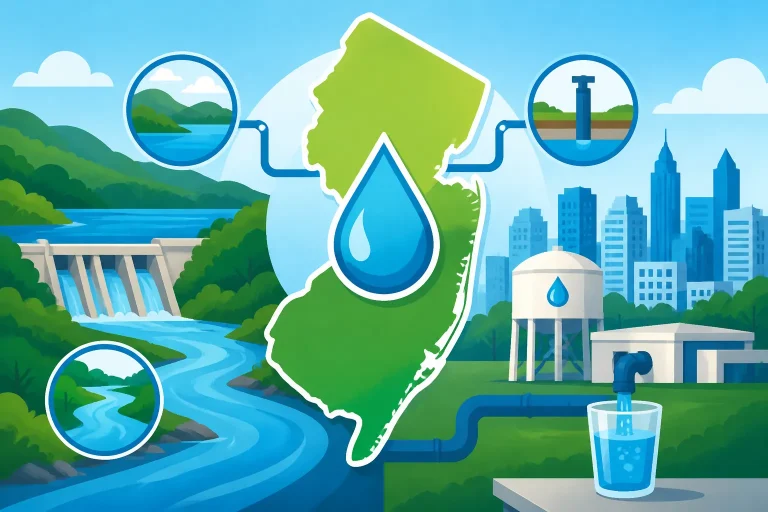
A service line is the pipe connecting a water main to a building. Depending on the property and local arrangement, different sections may have different owners. A line can also join with plumbing inside the building, so identifying the service-line material does not identify every pipe, fixture, or soldered connection that water passes through.
The New Jersey Department of Environmental Protection explains the main pathway: Typically, lead gets into your drinking water from the service lines, plumbing and fixtures that contain lead. That is why checking an address-level service-line record is useful, but it is not a complete answer about the water at a particular tap.
An inventory gives you a starting point. It may identify a line as lead, another material, or unknown, based on records, observations, or checks made by the water supplier. The record can help you ask focused questions and understand whether follow-up is needed. It is not the same as testing water from your faucet, and a record that does not identify a lead line should not be treated as proof that every part of the building’s plumbing is lead-free.
This distinction matters especially in older housing. The New Jersey Department of Health notes that lead pipes may still be found in parts of New Jersey where housing is more than 50 years old. The department also says lead pipes and solder used for potable water supplies were banned in 1987. Those facts help explain why building age can be a useful clue, but age alone does not confirm what is installed at an individual property.
A useful way to think about the inventory is as a map of what the supplier knows about the service line, not as a guarantee about all plumbing or a lab result for your kitchen tap. If a result raises questions, check the record with the supplier and ask what evidence supports the material classification. For broader context on what annual system data can and cannot tell you, see Annual Reports vs. Your Faucet: Why System Results Aren’t Your Tap.
What an inventory tells you and what it cannot
An inventory entry usually focuses on the material of the service line, but the labels and details shown can vary. A supplier may describe a line as lead, non-lead, or unknown, or may show separate information for sections on either side of a meter or property boundary. Read the supplier’s own explanation of its categories rather than assuming that a familiar label means the same thing everywhere.
| Inventory status | What it can tell you | What to ask next |
|---|---|---|
| Lead | The supplier’s records identify some or all of the service line as lead | Which section is identified, what evidence supports the entry, and what replacement process applies |
| Non-lead material listed | The record identifies a material the supplier does not list as lead | Does the entry cover the full line, and are indoor plumbing and fixtures outside the inventory’s scope? |
| Unknown or not verified | The supplier has not confirmed the material for the relevant section | What information or inspection could clarify it, and how can you submit evidence? |
| Different materials by section | The line may have more than one material or a transition between sections | Which section belongs to the supplier, which section is privately owned, and whether the full line has been assessed |
The table is a framework for asking questions, not a substitute for the supplier’s definitions. If the inventory offers a map, address search, letter, or downloadable record, check whether it refers to the service line as a whole or only a portion. A result may also distinguish between information the supplier verified and information it inferred from records. Ask what those terms mean in that supplier’s system.
An inventory generally does not tell you the condition of every pipe inside the building. A non-lead service-line entry does not rule out lead-containing plumbing or fixtures farther along the path to a tap. Similarly, a record that lists a lead service line does not specify the lead level in water at your faucet. That depends on the plumbing and water conditions at the property, and an inventory is not a water sample.
Do not use taste, smell, or color to decide whether lead is present. Lead may not produce an obvious change in water’s appearance or taste. For more on that limitation, read Lead Has No Taste or Smell: What Odd-Tasting Tap Water Can’t Tell You. If you are concerned about a health question, ask your local health department or a medical professional rather than relying on appearance, an inventory label, or a product claim.
Also avoid treating a general map as an address-level result. A map can show where records or service areas are grouped, but it may not establish the material at a specific property. Look for an address-specific lookup or ask the supplier to confirm the record for the property itself.
How to check your address and verify the material
Start with the water supplier that serves the address. If you are not sure which supplier that is, your water bill is a useful starting point; the article Not Sure Which NJ Water System Serves You? Start With Your Bill explains how to identify the system. The supplier’s official website may provide an address lookup, an inventory document, a service-line notice, or instructions for contacting its records team. Use the supplier’s official channels to confirm that a result applies to the exact property.
Check the address carefully
Enter the complete street address as the supplier requests it. A building with multiple units, entrances, or accounts may not appear under every version of its address. If a search returns no result, that does not by itself mean the line is lead or non-lead. Ask the supplier how it handles addresses that do not appear in its online tool.
If you are checking a rental, ask the landlord for the address-specific notice or inventory information, but verify the record with the supplier when possible. If you are buying a home, request the seller’s records and compare them with the supplier’s current information. A real-estate disclosure, an old letter, or a prior owner’s recollection can be useful background, but it may not reflect a later inspection or a corrected record.
Ask how the classification was made
A label is more useful when you know how it was assigned. Ask whether the supplier based the entry on historical records, a visual inspection, a field check, or information submitted by a customer. Ask whether the supplier has verified the full service line or only one section. If the answer is unclear, ask what further documentation or inspection could resolve the question.
Do not assume that a visible pipe inside the building tells you the material of the buried pipe outdoors. The visible portion may be a different section, and a change in material can occur between the meter, the building entry point, and the water main. If you want to inspect a visible section, use the supplier’s instructions and avoid disturbing the pipe. For a careful walkthrough of what a homeowner can look for, see How to Identify Your Home’s Water Service Line Material in New Jersey.
Save the record and any supporting details
Keep a copy or screenshot of the inventory result, notices, and replies from the supplier. Record the date you checked and the address or account identifier used, without sharing private account details publicly. If you later find a mismatch, having the original record makes it easier to explain what changed or what needs correction.
If the supplier directs you to a separate state or local lookup, follow its current instructions. A search result may help identify a supplier or provide background, but ask the supplier to confirm whether it is the current record for your address. The important point is to get an address-specific answer from the organization responsible for the service-line information, not to infer a property result from a nearby home or neighborhood map.
What to do when a line is unknown or records conflict
An unknown entry is an unresolved status, not a material finding. It does not mean the pipe is lead, and it does not mean the pipe has been cleared as non-lead. The right next step is to find out why the supplier has not confirmed the material and what it accepts as evidence.
Contact the supplier through its official website and provide the property address. Ask whether the entry refers to the complete line or a particular section, whether any previous inspection or replacement is recorded, and whether the supplier has a process for submitting photos or other documentation. If you have a notice, include its identifying information when speaking with the supplier, while keeping personal account details private.
If you and the supplier have different records, be specific about the mismatch. For example, explain whether the address is missing, whether a replacement is not reflected, or whether a letter describes a different material than the online lookup. Ask the supplier to explain which record is current and how it will review a correction. Do not assume that a photo, contractor note, or previous owner’s paperwork will automatically change the inventory; ask what evidence the supplier needs.
An inspection may require access to a portion of the line that is not visible. Do not dig, cut, scrape, or otherwise disturb a buried service line to identify it on your own. Ask the supplier before exposing or altering any part of the line, and confirm who is responsible for arranging access. If a plumber or other contractor is involved, ask the supplier how the work should be coordinated.
A supplier’s records may identify separate service-line sections. If the material differs from one section to another, ask for the location and ownership of each section in writing. This can affect who needs to authorize work and what part of the line a proposed project includes. For a closer look at the ownership question, see Who Owns Which Part of a Lead Service Line in New Jersey?.
If the supplier says the status is unknown and points to a process or deadline, ask where that information is published and what it means for your address. You can also read What Is NJDEP’s Deadline for Identifying Unknown Service Lines? for context on the state-level question. Do not infer that a particular address is scheduled for replacement just because a general deadline or program is discussed. Confirm the status and next steps with the supplier serving the property.
When records conflict after work has already been completed, gather the work order, contractor documentation, photographs taken before and after the project, and any supplier correspondence. Ask the supplier to update or confirm its record. Keep in mind that a record correction and an assessment of indoor plumbing are separate matters.
How replacement works and what to ask before agreeing
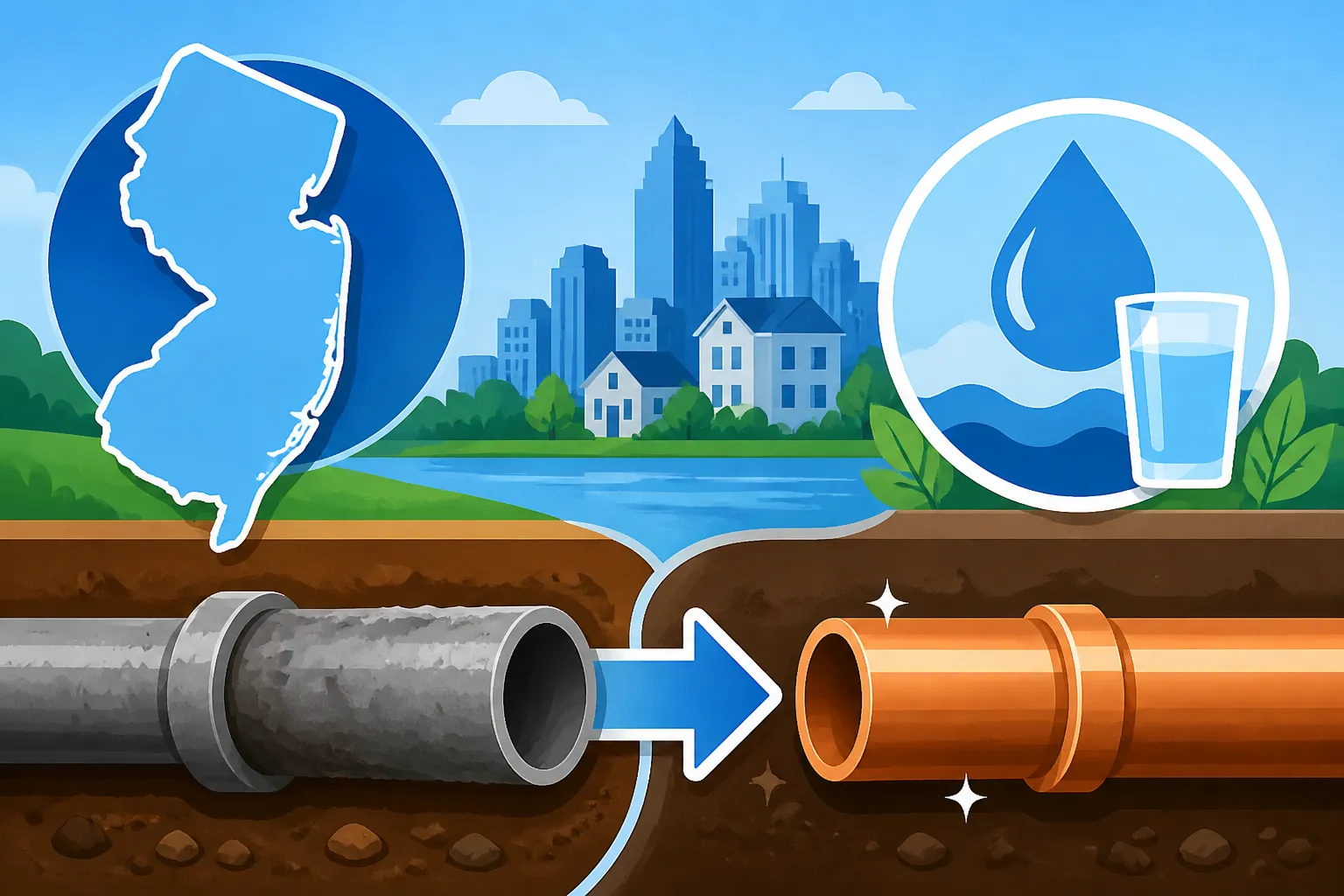
If the supplier identifies a lead service line, ask for the replacement process that applies to your property. The details can depend on the line’s ownership, the supplier’s program, access conditions, and the scope of the work. Do not assume that every project replaces the same sections or that a quoted job covers all plumbing inside the building.
Before agreeing to work, get clear answers to practical questions:
- Which sections of the service line are identified as lead?
- Which sections are included in the proposed work?
- Who owns each section, and who is expected to arrange or authorize work?
- Does the project include the portion from the main to the property, or only part of that route?
- Is any indoor plumbing, meter-related work, or fixture work included or excluded?
- Who will perform the work, and how will access to the property be arranged?
- What preparation, temporary water arrangements, or follow-up does the supplier recommend?
- What paperwork will document the work and any material changes?
- Who should you contact if the inventory does not reflect the completed work?
Ask for the scope in writing. A brief explanation can prevent misunderstandings about whether “replacement” means a full service-line replacement or only a particular segment. If any section is not included, ask why and what options exist for addressing it. The supplier can explain its process, but the property owner should also understand any work that falls outside the supplier’s stated scope.
Before excavation or other disruptive work, ask what you should do around the work area and who will restore surfaces that are disturbed. Confirm whether access is needed inside the building and whether the water service could be interrupted during the project. These are project-specific details, so the supplier or contractor should provide current instructions for the actual job rather than relying on general advice.
Ask about the possibility of a partial replacement. If only one portion is replaced, another portion may remain in place, and the supplier’s records should identify what was and was not changed. Ask what steps are recommended for the transition and whether the supplier will provide information about water use, flushing, or sampling after the work. Follow the project-specific instructions rather than assuming a routine flush or a filter resolves every concern.
The division between public-side and private-side work can be confusing. The boundary may not line up with the point where a pipe enters the building, and different parties may be responsible for different segments. Confirm the boundary for your address and ask who is coordinating each segment. For related cost and responsibility questions, see Who Pays the Owner’s Share of a New Jersey Service Line Replacement?. For scope questions, Does a New Jersey Service Line Replacement Include Indoor Plumbing? covers why replacing the service line does not necessarily mean replacing all indoor pipes and fixtures.
If you are a tenant, do not arrange excavation or plumbing work yourself without the property owner’s approval and the supplier’s instructions. Ask the landlord for the current record and the plan for any work. A tenant can still contact the supplier to ask how to verify an address-level entry or receive service information, but the landlord and supplier should clarify who can authorize work at the property.
After replacement: confirm the work and consider remaining plumbing
When the work is complete, ask for written confirmation of what was replaced and what material remains. The paperwork should help you understand the project’s limits, not just show that a contractor visited the property. Save the work order, completion record, supplier correspondence, and any instructions about water use or follow-up.
Check whether the supplier has updated the inventory for the address. If the online record still shows lead or unknown, ask whether the update is pending, whether the supplier needs additional documentation, or whether part of the line remains. Do not assume the inventory is wrong simply because it has not changed immediately; ask the supplier to explain the status and provide the current record.
A replaced service line does not automatically establish that all lead-containing plumbing has been removed. The New Jersey Department of Environmental Protection’s explanation includes service lines, plumbing, and fixtures as potential sources. Indoor pipe, solder, and fixtures are separate parts of the water pathway and may need their own assessment. If you have questions about a particular building’s plumbing, a qualified plumber can help identify components, while a water sample can answer a different question: what is present in the water at the sampled location and time.
If you plan to test water, choose the test based on the question you need answered and follow the sampler’s instructions exactly. Sampling procedures matter; an incorrectly collected sample may not provide the information you want. Ask the supplier or a qualified laboratory about available sampling options and how to interpret the report. A service-line inventory and a tap-water test answer different questions, so neither should be treated as a replacement for the other.
A filter may be a temporary or additional measure in some situations, but it does not replace a needed service-line repair or establish that all plumbing concerns are resolved. If you consider a filter, verify that its certification and performance claim match the specific contaminant and the water result you are addressing. Follow its use and replacement instructions, and ask a qualified professional or the supplier for guidance if you are unsure. See Picking a Lead-Certified Filter for New Jersey Tap Water for how to check claims and match a product to the concern. Do not assume that an ordinary taste or sediment filter is appropriate for lead.
If you have questions about exposure or health effects, contact your local health department or a medical professional. For practical steps while lead is suspected in a household’s water, see Drinking and Cooking While Lead Is Suspected in New Jersey Tap Water. The right advice may depend on the household and the actual plumbing and water information, so avoid relying on a general inventory label as individual health guidance.
Keep the paperwork with other property records, especially if you may sell or rent the home. Include the supplier’s current inventory result, replacement documentation, and any relevant plumbing or water test records. For a buyer, having the documents makes it easier to distinguish a verified replacement from a verbal assurance and to identify any remaining unknowns.
Renters, buyers, and household next steps
Different people may need the same service-line information for different reasons. A homeowner may be planning work; a renter may be trying to understand a notice; a buyer may be assessing an older home before closing. In every case, the useful sequence is similar: confirm the supplier, check the address-level inventory, clarify unknowns, and save the answer.
If you rent
Ask your landlord for the service-line notice or any available inventory result for the property. If the supplier’s lookup is public, check the address directly as well. If the record is missing or unclear, contact the supplier through its official website and ask how tenants can confirm the status and receive current notices. A landlord may control access and authorize physical work, but that does not make a tenant’s question about the water record unreasonable.
If the landlord says the line was replaced, ask for the completion record and clarify which sections were included. A repair to a pipe inside the unit may not establish that the service line was replaced, and a service-line project may not cover the building’s indoor plumbing. The details matter more than a general statement that “the pipes were done.” See Renters and Tap Water in New Jersey: Bills, Lead Notices and Reports for related questions about notices and water information in a rental.
If you are buying
Ask the seller for the supplier’s current service-line record, any notices, and documents for completed work. Then verify the property with the supplier. If the inventory says unknown, ask what could resolve it and whether the seller has records that are not reflected in the current entry. If work is proposed before closing, clarify who is responsible for authorizing and completing it, what parts are covered, and what documentation will be provided.
Do not treat the age of the home as a final answer. The New Jersey Department of Health says lead pipes may still be found in parts of New Jersey where housing is more than 50 years old, and that lead pipes and solder used for potable water supplies were banned in 1987. These facts make construction history worth asking about; they do not prove the material at a particular address. A current supplier record and property-specific documentation are more useful for assessing the line.
If service-line records are unclear, make the uncertainty part of your due diligence rather than assuming it will be resolved automatically after closing. Ask the supplier what information is available, and ask a qualified professional about any inspection or plumbing questions that fall outside the inventory. A service-line status is only one piece of a broader review of the home’s water system.
If you own the home and are planning work
Before hiring someone to expose, repair, or replace a service line, contact the supplier. Ask whether the supplier must coordinate or approve work on any section and what documentation it needs to update the inventory. This can prevent work from proceeding on the wrong section or leaving the records unclear.
Keep the supplier’s answer, the contractor’s scope, and completion paperwork together. If the contractor identifies a different material from the inventory, ask the supplier how to report that discrepancy. If the work changes only part of the line, record what remains and ask whether any additional steps are recommended.
A practical checklist
- Identify the water supplier for the property.
- Check the supplier’s address-specific service-line record.
- Ask what the inventory classification means and how it was verified.
- Confirm whether the entry covers all sections of the line.
- Treat unknown status as unresolved, not as proof of either material.
- Contact the supplier before disturbing or replacing a line.
- Get the project scope, ownership responsibilities, and follow-up instructions in writing.
- Save records and confirm that the supplier’s inventory reflects completed work.
- Consider indoor plumbing and tap-water testing separately from the service-line record.
- Ask a local health department or medical professional about health concerns.
A clear record can make the next step easier, but it should not be asked to answer questions it was not designed to answer. Use the inventory to establish what the supplier knows about the service line, then verify the material and project scope with the supplier and assess indoor plumbing or water quality separately when needed.
Frequently Asked Questions
Does a non-lead inventory result mean my tap water has no lead?
No. The inventory describes service-line information, not every pipe, fixture, or soldered connection inside a building, and it is not a tap-water test. Ask the supplier what sections the record covers and consider appropriate testing if you need information about water at a specific tap.
Does an unknown result mean the pipe is lead?
No. Unknown means the material has not been confirmed in the record. Ask the supplier what evidence it has and what steps could clarify the status.
Should I dig up the service line to check it?
Do not excavate, cut, or disturb a line on your own. Contact the supplier first and ask who can arrange an inspection and what precautions apply.
Does replacing the service line replace indoor plumbing too?
Not necessarily. Ask for the project scope in writing and confirm which sections are included. Indoor plumbing, fixtures, and solder may need separate attention.
Who should I contact with health questions?
Ask your local health department or a medical professional. A supplier can explain its inventory and replacement process, but an inventory is not individual medical advice.
Sources
- New Jersey Department of Environmental Protection (checked October 7, 2026)
- New Jersey Department of Health — Department of Health | Environmental Health | Lead Overview (checked November 13, 2026)
Disclaimer
This article is for general informational purposes only and does not constitute professional advice. Laws, prices and regulations vary by location and change over time. Consult a qualified professional for guidance on your specific situation. New Jersey Water Guide is not a government agency or water utility and is not affiliated with any public water system.